

What better way to understand the realities of caring for a newborn than to actually have one to look after?
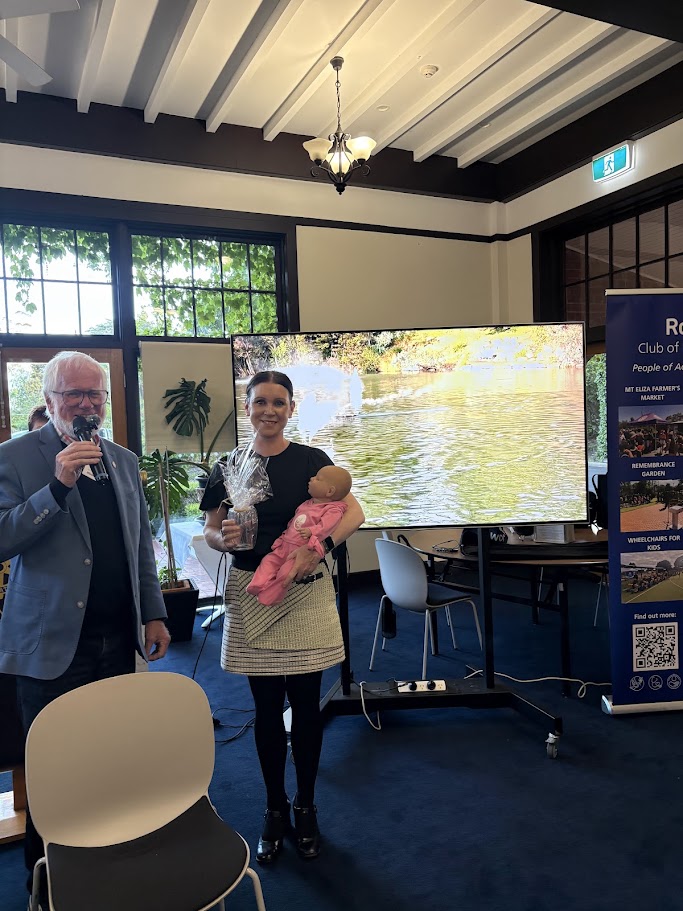
At a recent Rotary Club of Mt Eliza meeting, we were given a fascinating insight into the Health and Human Development program at Peninsula Grammar and, in particular, an innovative infant simulator program that gives Year 11 students a very real taste of what life with a newborn can be like.
Mel, who teaches Biology and Health and Human Development, explained how the subject gives students the opportunity to explore health and wellbeing across different stages of life.
In Year 11, students consider the physical, mental, social and emotional dimensions of health, along with issues affecting young people including mental health, alcohol, drugs and nutrition.
They also explore adulthood, parenthood, conception, pregnancy and the stresses and supports associated with becoming a parent.
As part of this learning, students take an infant simulator home for 24 hours.
And these are no ordinary dolls.
The babies are highly sophisticated pieces of technology, with sensors throughout their clothing and equipment. They can cry when they are hungry, need changing or require attention, and students must learn to recognise the different cries and respond appropriately.
The student wears an identification band which allows the baby to recognise its designated caregiver. If someone else attempts to feed or change the baby, it won't respond.
The simulator records the student's care throughout the 24-hour period, including feeding, nappy changes, responses to crying and other aspects of the baby's care. Students receive a detailed report at the end of the experience.
But the assignment goes well beyond simply looking after the baby.
Students create a digital photo album documenting their experience, interview their own parents or another parent about the realities of becoming a parent, and research a prenatal or maternal health condition.
The aim is to encourage students to think about the realities of parenthood rather than simply learning about it from a textbook.
Mel shared some fascinating examples from the program, including students who were initially considered unlikely to embrace the experience but surprised everyone with how caring and responsible they became.
For some students, the experience was exhausting. Their sleep and routines were disrupted and they had to think carefully about how they could manage normal activities while caring for their “baby”.
Others discovered something unexpected: a new appreciation for their own parents and the challenges they had faced when raising their children.
There was also plenty of humour as Mel demonstrated just how realistic the babies can be. One moment the room was happily admiring the tiny simulator, and the next everyone was trying to work out exactly what that very realistic cry meant.
The program is now in its second year, with growing student interest in Health and Human Development.
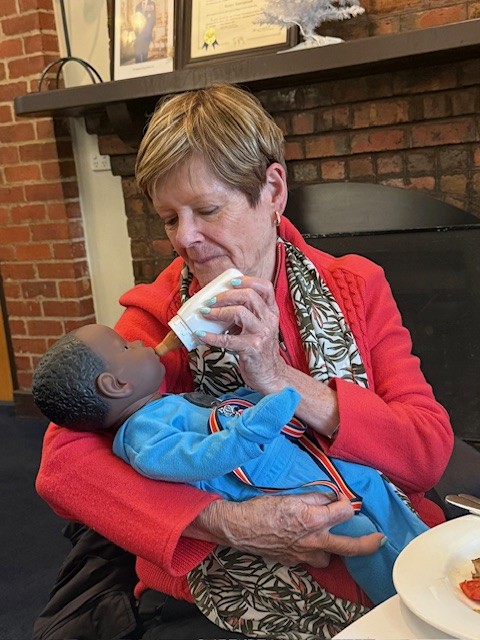
It was a wonderful reminder that education isn't always about sitting behind a desk and absorbing information. Sometimes the most memorable lessons involve responsibility, disrupted sleep, a very noisy baby and having to work out what to do next.
Thank you to Mel for sharing this fascinating program with Rotary Mt Eliza and giving us an insight into the creative ways schools are preparing young people for life beyond the classroom.
At Rotary, we value education and young people as an important part of building stronger communities and giving the next generation the skills and confidence to take on the future.
#RotaryClubMtEliza #RotaryDistrict9815 #RotaryInternational #PeopleOfAction #Education #Youth #HealthAndHumanDevelopment #LifeSkills #Community #MtEliza #MorningtonPeninsula