

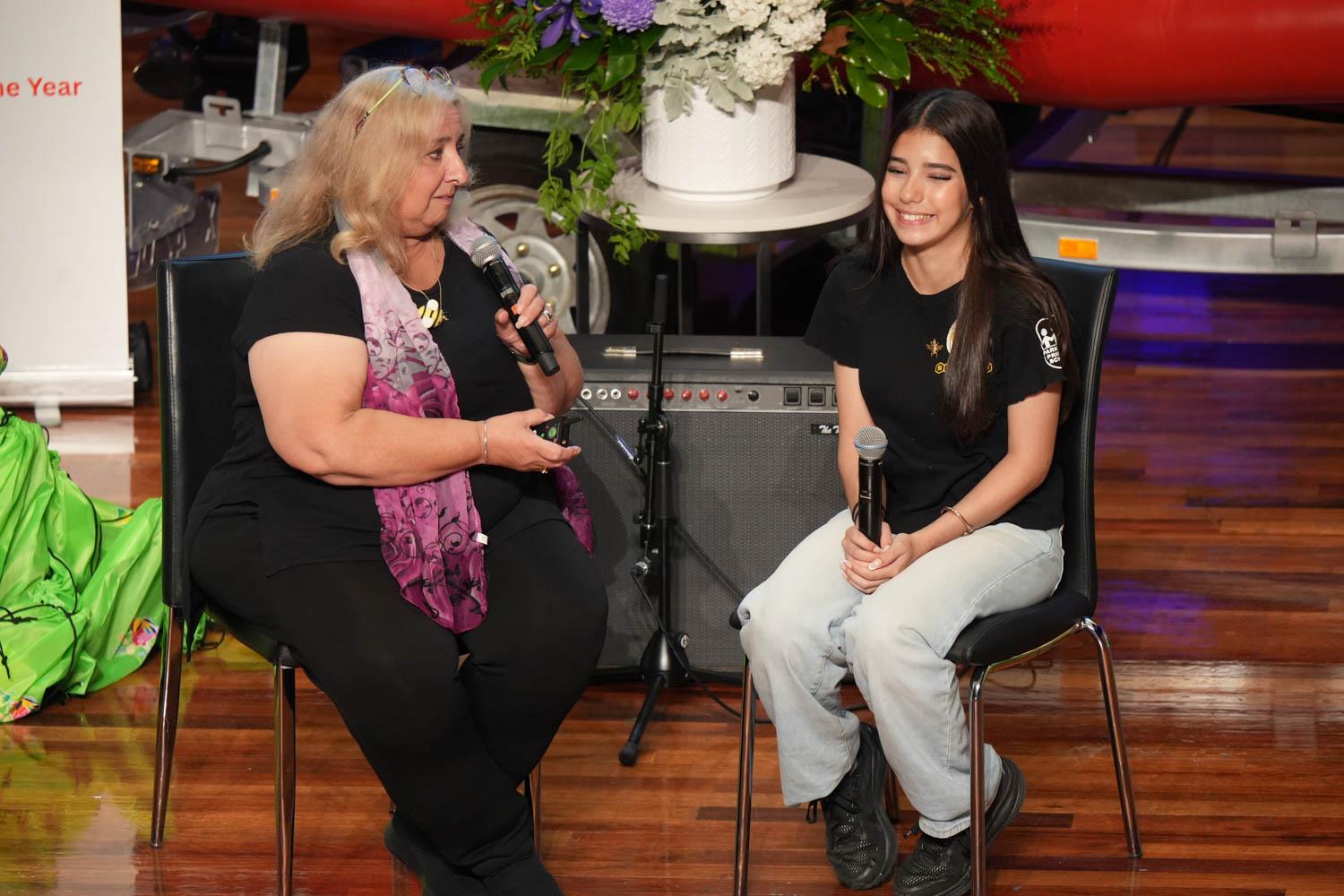
Sophia and three classmates from Parkmore Primary School started their journey when they were just nine years old. What began as a simple curiosity about bees quickly grew into a powerful environmental initiative that engaged their school, their community, and even government leaders.
Discovering the Importance of Bees
The students initially became interested in honeybees, but during their research they discovered the global challenges facing bee populations, including the devastating impact of the Varroa mite.
Realising that tackling a global issue was beyond what four primary school students could achieve alone, they shifted their focus to native Australian bees — remarkable pollinators that are just as important to ecosystems and agriculture.
These include species such as the Blue-banded Bee, famous for its striking colour and unique “buzz pollination,” and the adorable Teddy Bear Bee.
Creating the Bee Safe Garden
The team launched what became known as the Bee Safe Garden.
With support from their school and community, the students:
Designed and built a native pollinator garden
Planted bee-friendly native plants (many donated by local supporters)
Installed bee hotels for solitary bees
Created educational materials, including a book and a game to teach younger students about pollinators
The garden quickly became a thriving habitat for bees and other insects.
Taking the Message Beyond the School
Sophia and her team didn’t stop at their school gates.
They contacted honey companies proposing that labels on honey jars include educational information about bees. When companies didn’t respond, the students took their idea to government leaders.
They successfully engaged the Lily D'Ambrosio, Victoria’s Minister for Environment, who helped them connect with honey producers to include QR codes on honey labels linking consumers to information about pollinator conservation.
Collaboration with Scientists
Their work also attracted the attention of researchers from Monash University.
A visiting professor was so impressed with the Bee Safe Garden that the students were invited to assist with pollinator research by collecting data from their garden and submitting it to researchers.
For four primary school students, contributing to real scientific research was an extraordinary achievement.
Global Recognition
The project went on to compete in the Future Problem Solving International Conference.
After placing second in Australia — the only government school among the top teams — the students progressed to the international finals in Indianapolis, where they finished fifth in the world.
A Lasting Legacy
Today, the Bee Safe Garden continues to thrive.
Even though Sophia has moved on to secondary school, the project lives on at Parkmore Primary. The garden has become part of the school curriculum, with students regularly monitoring the habitat, collecting data, and learning about pollinators.
What started as a small idea from four nine-year-olds has become a living legacy for future students.
A Lesson for All of Us
Sophia’s story is a powerful reminder that leadership and impact are not defined by age.
With curiosity, persistence, and community support, four young students created a project that now educates hundreds of people about pollinators and environmental stewardship.
Their message was simple but powerful:
Be the change you want to see in the world — and help save the bees.