

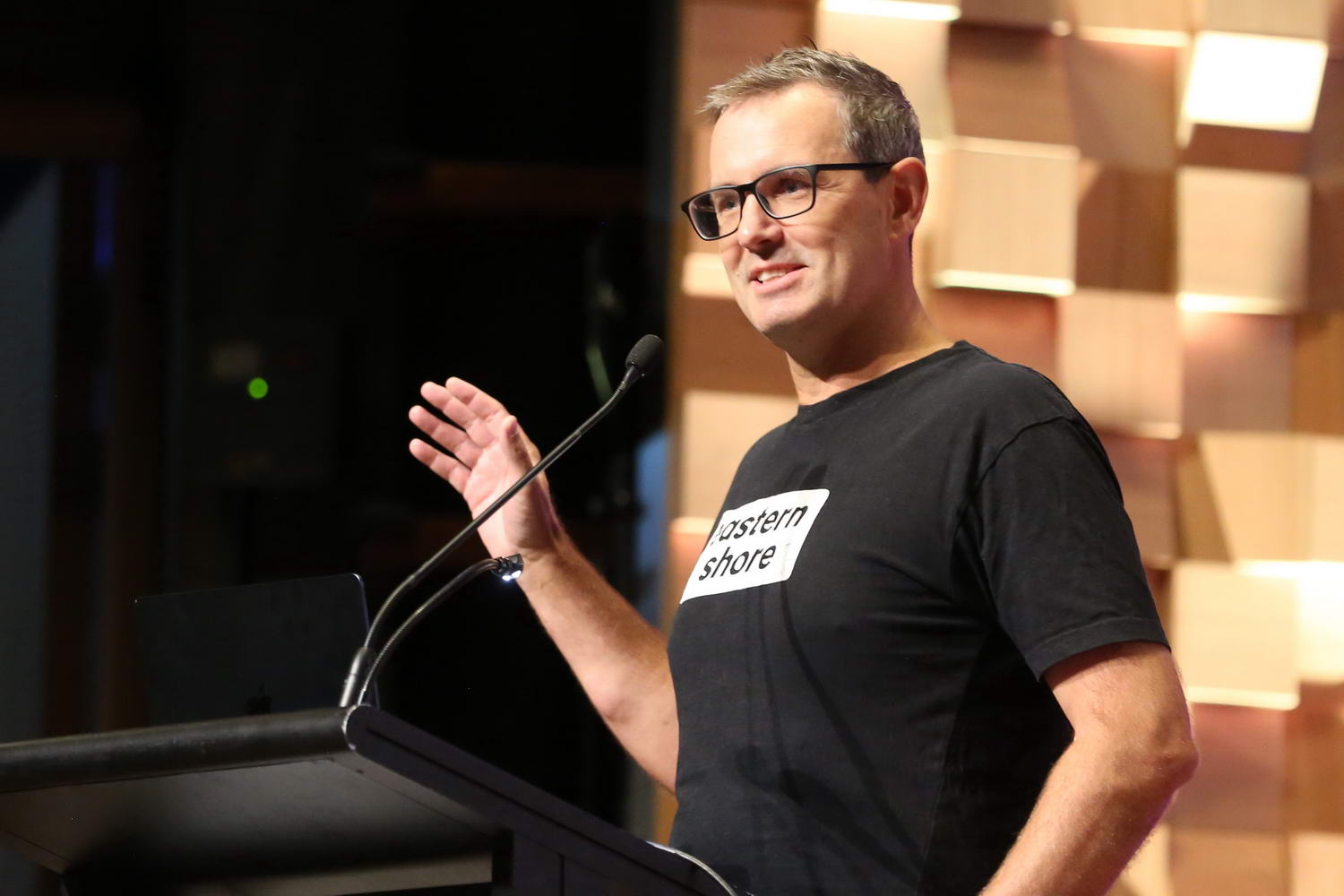
With more than 18 years of experience working with global brands on emerging technologies, Simon has built a reputation for translating complex technical concepts into practical, human-focused solutions. Earlier in his career he served as Chief Product Officer at Lifetimes, where he helped develop one of the world’s first business-focused chatbot products.
But his message to Rotarians was clear:
Artificial intelligence is not about replacing people — it is about amplifying what people can do.
A familiar Rotary scenario
Simon opened with a situation many Rotarians recognise.
A group gathers around a table to discuss a new initiative — perhaps a mentoring program to support students at risk of disengaging from school. The energy in the room is strong and the idea feels exciting.
Then the questions start:
How do we research the need?
How do we secure funding?
How do we connect with schools?
How do we recruit and train mentors?
How do we manage regulations, scheduling and administration?
Suddenly the list feels overwhelming.
In many volunteer organisations, this is the moment when great ideas stall.
But today, Simon explained, that doesn’t have to happen.
“One person opens a laptop and says, let’s just start.”
A transformational moment in technology
Artificial intelligence may feel new, but the concept dates back to the 1940s, when mathematician Alan Turing pioneered early computational algorithms.
For decades AI has quietly powered tools we use every day — navigation apps, streaming recommendations, search engines and online services.
What has changed in recent years is the rapid emergence of generative AI.
This new generation of technology can:
write text and reports
generate images, music and video
analyse complex datasets
translate languages
assist with research and strategy
In other words, AI is beginning to support many of the knowledge-based tasks humans traditionally perform.
A shift as significant as the printing press
Simon compared this moment to the invention of the printing press.
Before printing, knowledge was tightly controlled. Once it became widely available, ideas spread rapidly and helped spark the Renaissance.
Today, AI is creating a similar shift.
For the first time, small organisations and individuals can access capabilities once limited to large institutions.
That means a small volunteer team — even a Rotary project group — can now access research, strategy and analytical capabilities that once required large professional teams.
Practical uses for Rotary clubs
Simon shared several examples of how Rotary clubs can use AI immediately.
Grant writing
Instead of simply asking AI to “write a grant”, clubs can upload the grant guidelines, previous successful submissions and background information about their project. AI can then help draft a far more targeted application.
Data analysis
AI can analyse spreadsheets and datasets quickly, helping volunteers identify insights that might otherwise take days to uncover.
Program design
Clubs can research global examples of successful programs and use evidence-based insights to design stronger community initiatives.
Multilingual communication
AI can translate information into multiple languages and even adapt messaging to better suit cultural contexts — helping Rotary engage more effectively with diverse communities.
Amplifying small teams
In corporate environments, initiatives like these are usually supported by large teams and significant budgets.
AI changes that dynamic.
According to Simon, a Rotary team of five people could potentially achieve work that once required teams of fifty.
The key is not the technology itself — it is the mindset to explore and use it.
The enduring human advantage
Despite the excitement around artificial intelligence, Simon emphasised that Rotary’s greatest strength remains human connection.
As routine tasks become automated, the most valuable work will increasingly involve what researchers call connective labour — the human activities that technology cannot replace.
These include:
building trust
mentoring and supporting others
creating partnerships
resolving conflict
bringing communities together
creating meaning and purpose
These are the very qualities that have always defined Rotary.
Responsible use of AI
Simon also reminded the audience that AI must be used responsibly.
Important principles include:
verifying information before relying on it
recognising that AI can sometimes generate incorrect answers
being aware of potential bias in training data
avoiding the sharing of sensitive or confidential information
AI should be treated as a powerful assistant — helpful, but not infallible.
A powerful opportunity for service
Simon concluded by encouraging Rotarians to think boldly.
Imagine a Rotary club where members can:
research like a university team
communicate like a professional marketing agency
analyse problems like a policy institute
All while staying true to Rotary’s purpose of service above self.
As Simon reminded the audience, the real power lies in combining new tools with Rotary’s greatest asset — its people.
“The technology is powerful,” he said.
“But your judgement, your values and your commitment to your communities will always matter most.”