
Rotarians at the District Conference in Hobart were deeply moved by the story of Reach Siem Reap, a grassroots organisation in Cambodia dedicated to helping children and families escape poverty through education, healthcare and opportunity.
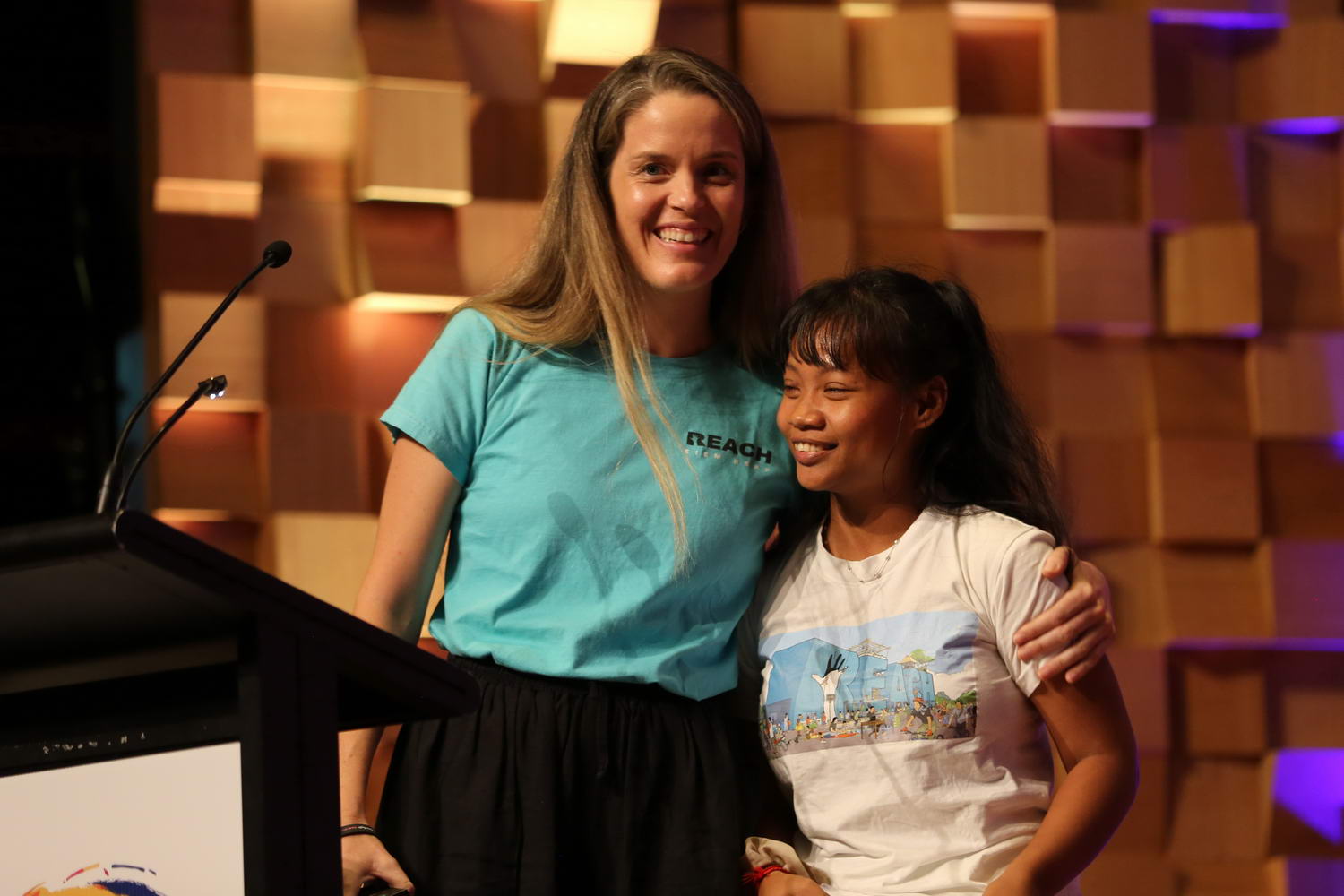
Founder Emily Williamson and program manager Sokley Tep shared the remarkable journey of the organisation and the impact it is already having on communities in Siem Reap.
Emily grew up in Melbourne with access to excellent education, something she admits she took for granted as a teenager. Her perspective changed dramatically when she first visited Cambodia at the age of 18.
A few years later, at 21, she returned to volunteer as an English teacher. During her time there, a social worker took her to visit the homes of the children she had been teaching. What she saw left a lasting impression.
Children who appeared happy and enthusiastic in the classroom were living in extreme poverty — surviving in makeshift shelters constructed from scrap metal, without reliable access to sanitation or clean drinking water.
That moment reshaped Emily’s future.
Determined to help, she returned to Cambodia regularly during university breaks to volunteer and fundraise. Eventually she moved there permanently at the age of 23 to work in fundraising for a local organisation.
During those early years she organised charity cycling events across Cambodia that raised significant funds. However, she also learned a difficult lesson when the money raised was quickly spent without clear governance or long-term planning.
“It broke my heart,” she told the audience. “That was when I realised passion alone isn’t enough to change lives. You need a plan.”
With that lesson in mind, Emily founded Reach Siem Reap in 2019 with a vision to run a grassroots charity with the same professionalism, transparency and accountability expected of a global organisation.
The organisation opened its community centre in early 2020, enrolling more than 100 children from surrounding urban slum communities. Just three days later, however, the COVID-19 pandemic forced Cambodia into lockdown.
Instead of shutting down, the centre transformed into an emergency crisis hub for families during the pandemic, providing food, health support and essential services.
Today, Reach Siem Reap supports more than 370 children from over 180 families and employs 44 Cambodian staff members. The organisation delivers 13 integrated programs designed to address the root causes of poverty.
Children join the program as young as four and a half years old and continue receiving support through their education and into early adulthood until they secure fair and sustainable employment.
The programs include free education support, nutrition, healthcare, English language learning, digital literacy and vocational pathways.
Importantly, the organisation takes a holistic approach by supporting entire families rather than focusing on a single child.
One of the key initiatives is the “Rice Rewards” program, which provides families with rice when children consistently attend school and participate in programs. This simple incentive helps ensure that education remains a priority even when families are struggling financially.
Emily explained that it costs less than AUD $2,000 per year to support a child and their family through the Reach Siem Reap program.
While the organisation’s annual budget of around AUD $650,000 may sound substantial, when broken down per child it represents a powerful and cost-effective investment in long-term change.
The conference audience also heard a deeply personal story from Sokley Tep.
Growing up in rural Cambodia, Sokley faced a culture where girls were often discouraged from pursuing education. She was told that studying was unnecessary because one day she would simply marry and stay home to raise children.
Despite these expectations, she was determined to continue learning.
Her life changed when an NGO opened near her home and provided access to education and support. Through dedication and hard work, she eventually earned a scholarship to university.
Today, at just 23 years old, Sokley is part of the leadership team at Reach Siem Reap and oversees international volunteer placements while completing her bachelor’s degree.
Standing on stage during her first visit to Australia, she spoke about how education changed her life.
“I am standing here today because someone gave me an opportunity,” she told the audience.
“Education gave me confidence. It gave me my voice. Now we are creating those same opportunities for the next generation.”
Although the organisation is only six years old — with more than two years of disruption during the pandemic — the results are already impressive.
Reach Siem Reap has helped young people secure vocational training placements, internships and university scholarships. Several graduates are now studying degrees in fields such as nursing, teaching and information technology.
In the coming years, the organisation expects more than 120 students to move into higher education or skilled employment.
Rotary clubs have already played an important role in supporting the work, with many partnering through fundraising, volunteering and program sponsorship.
Delegates were also invited to participate in Reach Siem Reap’s charity cycling rides across Cambodia, which raise funds while allowing supporters to see the programs and communities firsthand.
As Emily concluded her presentation, she reminded the audience that meaningful change does not always require enormous resources.
“What Cambodia needs is opportunity,” she said.
“When opportunity meets determination, incredible things happen.”
The presentation ended with warm applause and a standing ovation — a reflection of both admiration for the work being done and hope for the future of the children and families supported by Reach Siem Reap.