
Katie Cooper challenges Rotarians to build resilient communities
At the Rotary District 9815 Conference in Hobart, strategic consultant and futurist thinker Katie Cooper invited Rotarians to step back and look at the long view.
Cooper, a Tasmanian who now works globally from her home state, spends much of her professional life helping organisations and communities plan for the next ten to twenty years. Her message to delegates was simple but powerful: the future is already emerging around us, and communities need to prepare now.
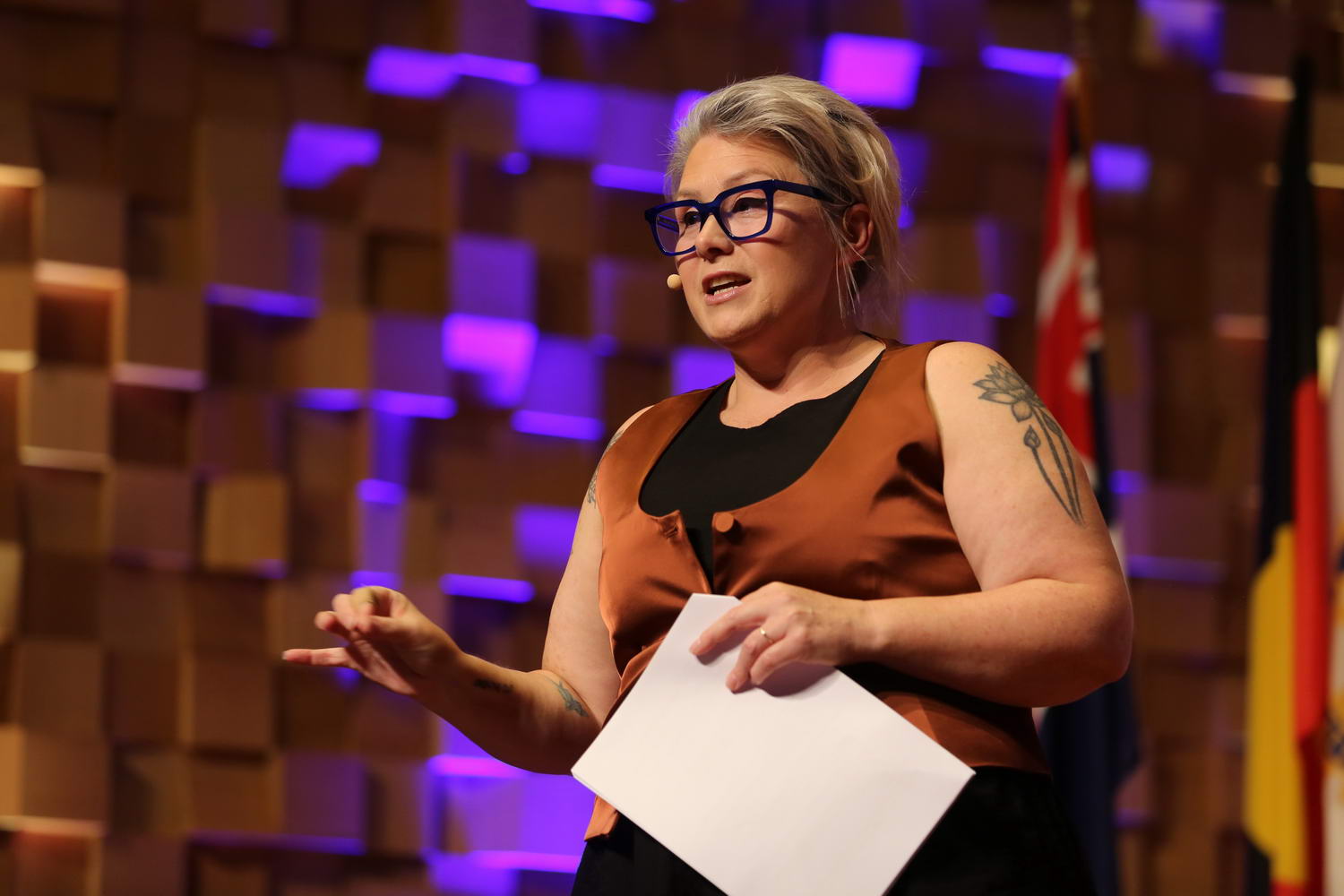
She opened with a reflection on resilience.
Resilience, she explained, is often misunderstood as simply “toughing it out”. In reality, resilient communities are those that stay connected, continue to act, and maintain strong relationships even when under pressure.
True resilience asks three key questions:
Can people still find help easily?
Can they stay connected?
Can they contribute meaningfully to their community?
If the answer to those questions is yes, a community is resilient.
The pressures facing communities
Cooper described a series of converging pressures now shaping Australian communities.
Housing stress, rising living costs, education pressures, family strain, health concerns and workplace stress are no longer isolated challenges. They are increasingly overlapping, creating a cycle that many people struggle to escape.
Loneliness is another growing concern. Recent data suggests that around 5.1 million Australians often feel lonely, representing nearly a quarter of the population.
At the same time, community structures originally designed for occasional crises are now facing multiple and ongoing pressures.
“These systems were built for a one in one hundred year event,” she said. “But today many communities are facing those events again before they have even recovered from the first.”
Five trends shaping the future
Cooper outlined five major trends that will influence communities in the coming decade.
Housing and cost of living pressures
The housing crisis is no longer affecting only traditionally vulnerable groups. Increasingly, it is impacting people who would previously have been considered financially secure.
Young adults trying to form households, essential workers commuting long distances, and older people unable to move from unsuitable homes are all part of this new landscape.
Often the biggest barriers are not just financial. They include navigating complex systems, digital barriers, and understanding eligibility requirements.
Cooper suggested that Rotary clubs could play a practical role by helping communities navigate these systems and by connecting people to the services that already exist.
An ageing population and changing volunteering
In regions such as Tasmania and parts of regional Victoria, populations are ageing rapidly. Over the next two decades, the ratio of working age people to older residents will shrink significantly.
At the same time, volunteering patterns are changing. Many people still want to contribute, but traditional long term commitments are becoming harder to sustain.
For organisations like Rotary, this may mean shifting toward more flexible volunteering opportunities and stronger intergenerational engagement.
Climate shocks and long tail recovery
Extreme weather events are becoming more frequent. While communities often respond strongly in the immediate aftermath, recovery can take years.
Insurance challenges, rebuilding homes, and restoring livelihoods all require long term support. Rotary’s role in community recovery may increasingly extend well beyond the initial emergency response.
Belonging and trust
A sense of belonging is not simply a social nicety. It directly influences whether people seek help, volunteer, or participate in community life.
When communities experience stress, trust can erode and social isolation can grow. Rotary’s strength, Cooper noted, lies in its ability to bring people together and create connections across different parts of the community.
Digital acceleration and exclusion
While many services are rapidly moving online, not everyone can keep up. Digital barriers are preventing some people from accessing housing, healthcare, and social services.
Interestingly, Cooper noted that some younger people are beginning to question a “digital first” approach, seeking more human connection and simpler technology.
This presents opportunities for community organisations to support both digital literacy and real world connection.
Rotary’s unique role
Cooper believes Rotary is uniquely positioned to respond to these challenges.
Not simply because of its size, but because of its trusted presence in local communities.
She described Rotary’s role in the future as threefold:
Convenor
Bringing organisations and community groups together to collaborate.Trusted messenger
Helping communities navigate misinformation and access reliable information.Connector
Linking people with the services, organisations and support systems already operating in their communities.
“Rotary doesn’t need to be the service,” she said. “Rotary is already the glue.”
A challenge for Rotarians
Cooper closed her presentation with a practical challenge.
She encouraged each club to choose one of the trends she outlined and run a small experiment within the next 90 days. Partner with a local organisation, listen to the community, and measure one small change.
Even a simple initiative such as a community listening session, a referral pathway map for local services, or a neighbourhood welcome event could create meaningful impact.
“You don’t have to solve everything,” she told delegates.
“The most valuable thing we can do in the next decade is simply to know our neighbours.”
With its deep local roots and strong networks, Rotary may be better placed than most organisations to help communities navigate the uncertain years ahead.