
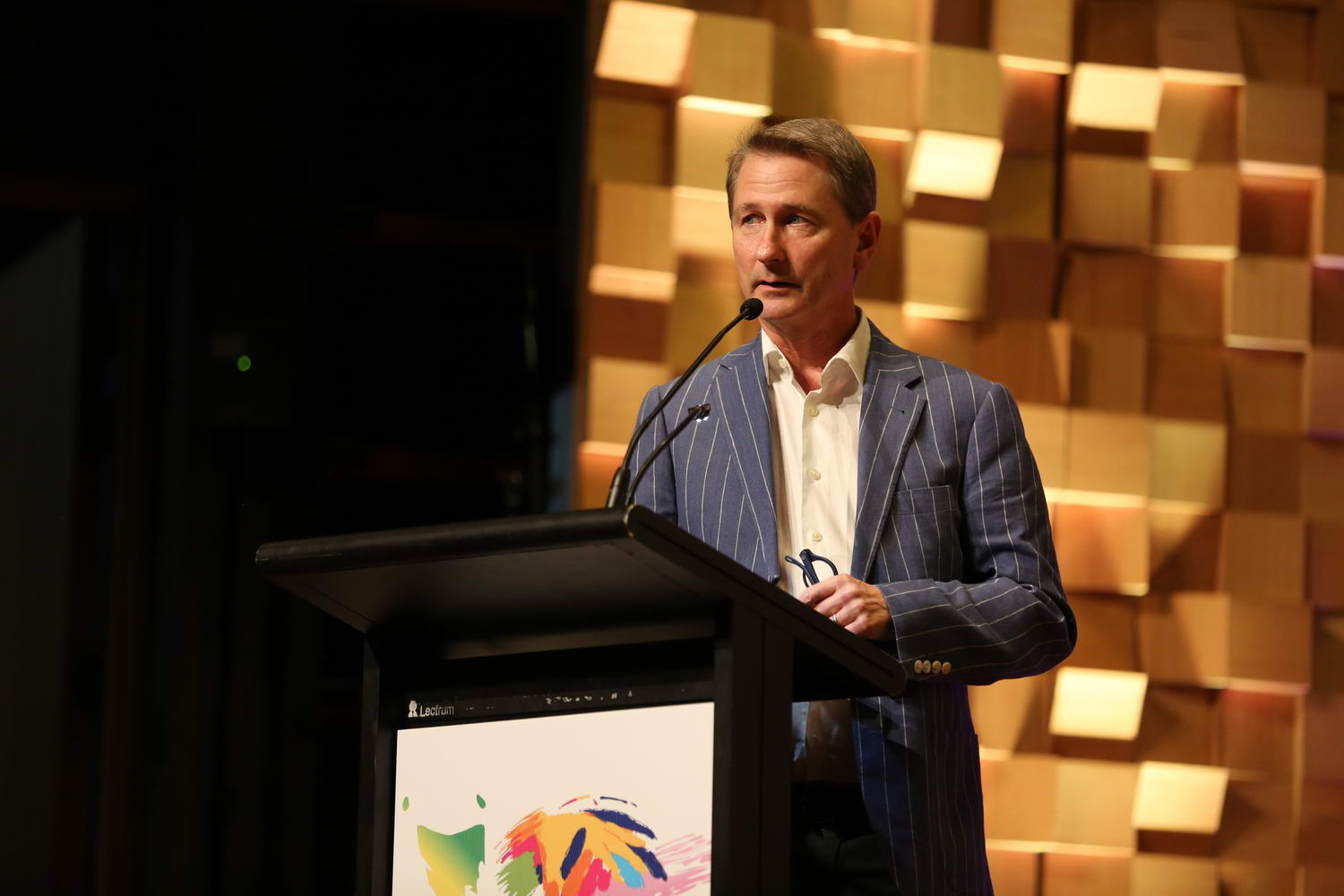
Delegates at the Rotary District Conference in Hobart were privileged to hear from plastic and reconstructive surgeon Dr Kirk Williams, who delivered a compelling presentation about the extraordinary humanitarian work being carried out through Interplast.
Founded in 1983 by Rotarians and surgeons who recognised the urgent need for surgical care in some of the world’s poorest regions, Interplast has spent more than four decades restoring form, function and dignity to people who would otherwise have no access to specialised surgery.
Dr Williams explained that Interplast’s approach is far more than simply flying in to perform operations. Instead, the organisation focuses on building sustainable local capacity by training surgeons, nurses and medical staff in the countries where they work. The aim is for local teams to become increasingly independent, ultimately reducing the need for visiting surgical missions.
Today Interplast teams provide surgery, post-operative care, medical training and mobility assistance across a vast region stretching from Sri Lanka to Mongolia and throughout the western Pacific.
Dr Williams shared insights from his work in the Solomon Islands, where he travels regularly with a volunteer surgical team. The conditions they encounter are confronting. Hospitals are often overcrowded and under-resourced, with patients and their families travelling days by boat or foot just to reach medical care.
Despite these challenges, the commitment of local medical staff and volunteers creates remarkable outcomes.
The team treats a wide range of conditions including cleft lip and palate, severe burns, hand injuries, tumours and congenital abnormalities. Many of these conditions, if left untreated, can lead to lifelong disability, social isolation and stigma.
Cleft lip and palate surgery is one of the most common procedures performed by the team. Without early repair, babies can struggle to feed and later face serious speech difficulties and social exclusion. Dr Williams explained that careful surgical planning is required, sometimes involving intricate reconstruction of muscle, bone and tissue to restore both appearance and function.
He also described the impact of conditions rarely seen in developed health systems, including severe burns that cause limbs to contract and deform, complex hand injuries from agricultural work, and cancers linked to the chewing of betel nut, a common but highly carcinogenic stimulant in the region.
In one particularly complex case, a young boy required reconstruction of facial bones and eyelids due to a rare congenital craniofacial condition. Through a combination of surgical skill and collaboration, the team was able to rebuild key structures and significantly improve the child’s quality of life.
Yet alongside the surgical challenges are the human stories that stay with volunteers long after they return home. Parents travelling for days in open boats to seek help for their children. Patients waiting patiently in crowded wards for the chance of treatment. Local staff working tirelessly despite limited resources.
Dr Williams reflected that the experience of working in the Solomon Islands has been the most rewarding aspect of his surgical career.
Since its founding, Interplast has performed more than 27,000 life-changing surgeries and delivered over 14,000 training opportunities for healthcare professionals across the region.
Looking ahead, the organisation aims to support 20,000 patients, train 7,500 healthcare professionals, strengthen 80 hospitals, and help partner countries improve their health systems and policies.
For Rotarians in the room, the message was clear: the continued support of Rotary clubs plays a critical role in making this work possible.
Through the dedication of volunteers, the partnership with local medical teams, and the generosity of organisations like Rotary, lives are being transformed one surgery at a time.