

n evening with Lachlan Heron, Physiotherapist
What does it really take to support elite athletes on the world stage?
At a recent meeting, the Rotary Club of Mount Eliza was given a fascinating behind-the-scenes look at the Winter Olympic Games by guest speaker Lachlan Heron, a physiotherapist working at the highest level of international sport.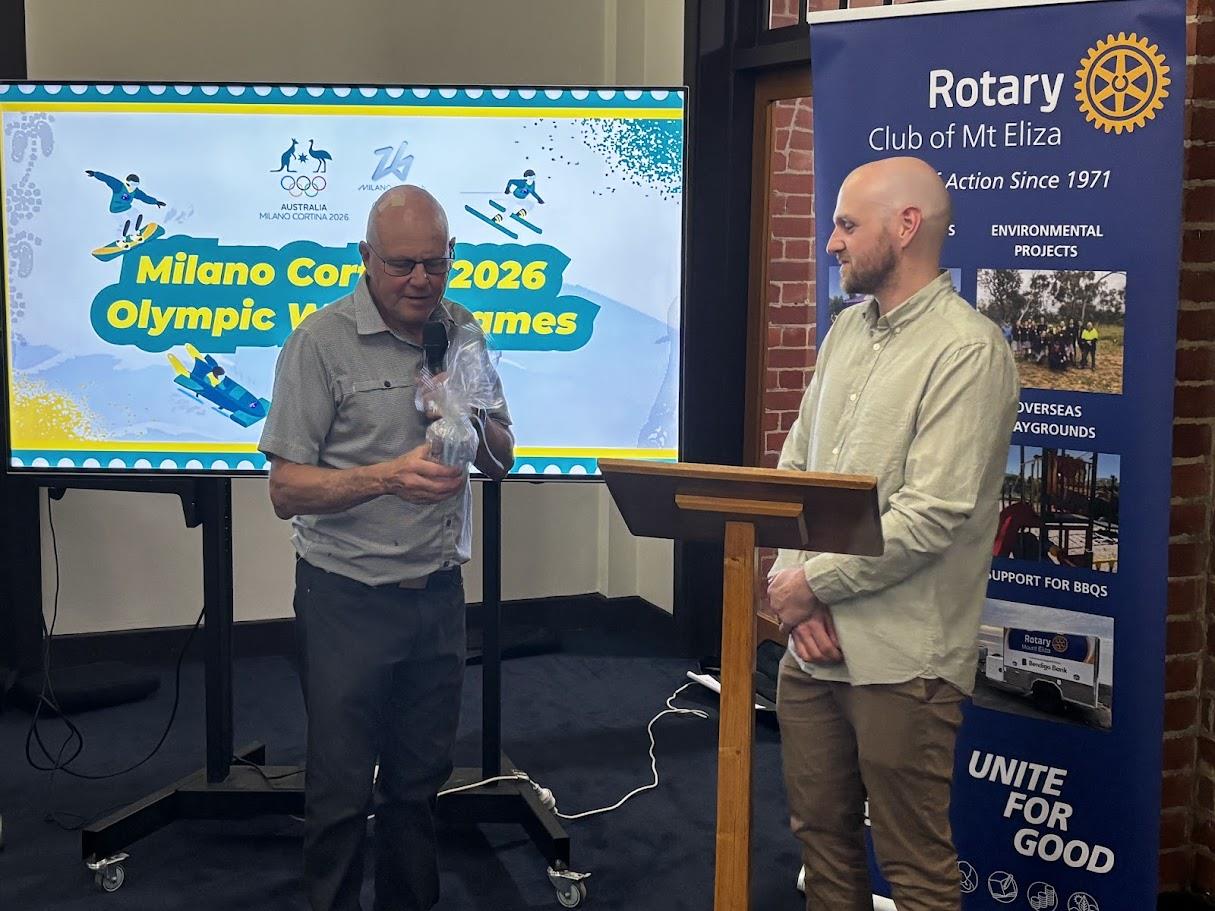
A graduate of Monash University, Lachlan has built a career in sports physiotherapy, completing a Master’s degree in exercise and sports physiotherapy and working extensively in elite athlete environments. Currently based in a sports injury clinic, his work has taken him far beyond the clinic room — onto the global sporting stage.
From Clinic to Olympic Competition
Lachlan shared how his journey into winter sports began with a personal passion for skiing, eventually leading to his involvement with high-performance teams and international competition.
Since the early COVID period, he has worked closely with national sporting programs, supporting athletes competing at major global events — including recent Winter Olympic campaigns.
A New Era of Olympic Games
One of the most interesting insights from Lachlan’s talk was how the structure of the Winter Olympics is evolving.
Rather than being centred in a single city, recent Games — including those in Milan and Cortina d’Ampezzo — are spread across multiple locations. This shift reflects a move toward sustainability, using existing infrastructure instead of building facilities that may later go unused.
However, this creates significant logistical challenges, with athletes, staff, and equipment needing to be transported across vast distances — often in harsh winter conditions.
The Role of a Sports Physiotherapist
While many assume physiotherapy at this level focuses on injury treatment, Lachlan explained that the reality is quite different.
His role is primarily about performance optimisation:
- Preparing athletes physically for competition
- Supporting recovery between events
- Identifying and managing small issues before they become major problems
- Assisting with logistics, communication, and even video analysis
In this environment, physiotherapists wear many hats — all aimed at helping athletes perform at their peak when it matters most.
Life Inside the Olympic Village
Life at the Games is intense and highly structured. Days often begin early and finish late, with a constant cycle of preparation, competition, recovery, and planning.
Temporary villages — sometimes built entirely from modular accommodation — house athletes and staff, reflecting the Games’ increasing focus on sustainability.
Despite the challenges, Lachlan described the experience as both demanding and deeply rewarding.
The Reality of Winter Sports
Lachlan also highlighted the unique challenges faced by Australian winter athletes.
Unlike many nations, Australia lacks domestic facilities for several winter sports, meaning athletes must spend much of the year overseas training and competing. The financial and personal sacrifices are significant, with long periods away from home and family.
Yet despite these challenges, Australia continues to achieve strong results, with increasing numbers of athletes finishing in top international rankings.
More Than Medals
While medal counts are always celebrated, Lachlan emphasised that success is also measured in consistency, improvement, and resilience.
With more athletes achieving top-10 and top-15 finishes than ever before, Australia’s presence in winter sports continues to grow — a testament to the dedication of athletes and support teams alike.
An Inspiring Perspective
Lachlan’s presentation offered a rare glimpse into the complexity, intensity, and teamwork behind elite sport.
It was a reminder that behind every performance on the world stage is an entire network of professionals working tirelessly to support athletes — often in ways the public never sees.