April 7: Afghan Restaurant Fellowship Dinner
Due to the School Holidays, Toorak College was not available so the Club continued a tradition of supporting a local business. This time we had a dinner at the new Afghan Restaurant that has moved into the Grey Fox building on Nepean Highway next door to Norwood House. Cathryn and her Fellowship team organised an excellent night with over 50 attending. The meal was a set menu with beef, chicken and vegetable dishes supported with a beautiful orange rice dish and bread and dips. The hosts were most friendly and accommodating and it was a great introduction to the tastes of Afghan Cuisine. Unfortunately the fellowship and fine food distracted the Bulletin Editor and no photos of the night were taken. Looks like a fine from the sargeant might be coming his way! Otherwise it was a most successful and fun night. Thankyou to all who helped with the night.
April 14: Member Display of Important Personal Memorabilia
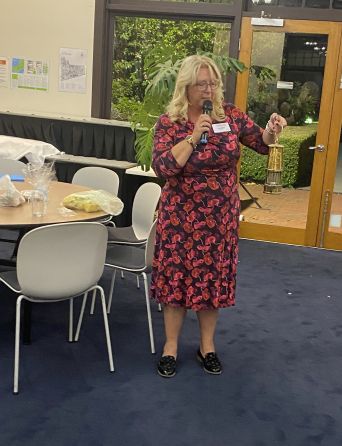
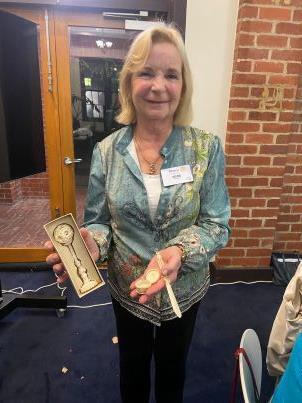
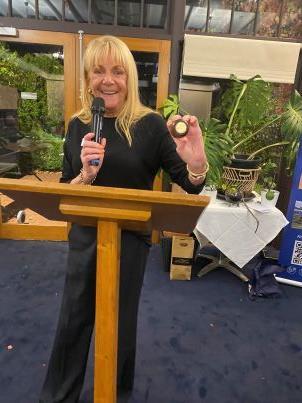
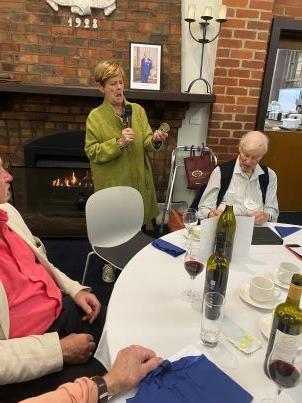
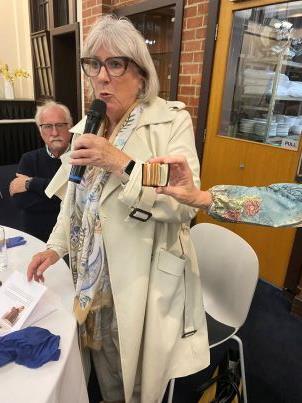
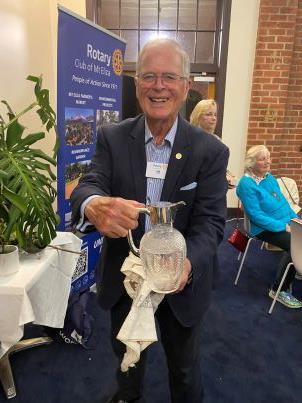
Judy organaised a night where many members brought a piece of memorabilia and explained it's importance to them. The items varied from beautiful antiques to interesting artifacts to cherished objects of the valued past. The stories attacheded to the articles were fascinating and gave us great insights to the histories of members families. It was lovely to hear the stories and learm more about our members back stories. Some of the photos of the night are below:
Yvonne and her miners lamp used by her family. Some of Suzies ivory pieces from her family. Pauline's Dad's clock from the 1950's
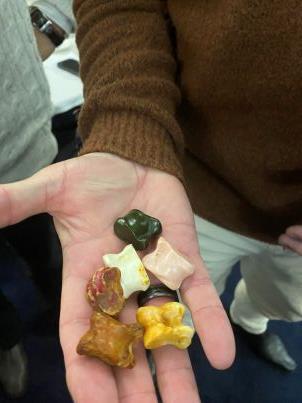
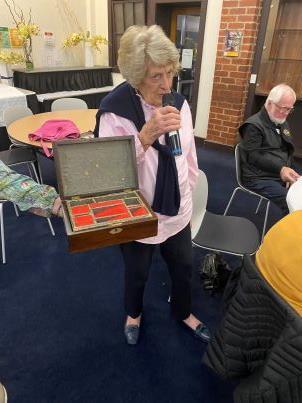
Judy's Knuckles Game from her childhood. Rhonda's great grand mother's jewelly box with a leter to Santa. John with Di's fork set a wedding gift for her grandmother
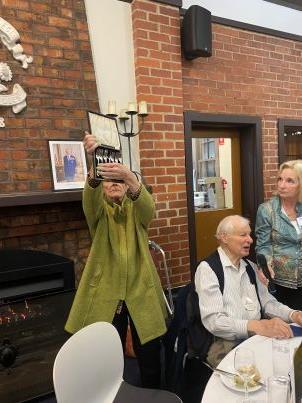
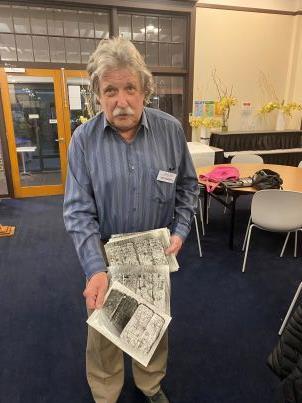
Chris with copies of a hand written book from the 1580! Trish with her golf trophy from the Nagasaki Golf Club, 1930. Carolyn with a 1876 miniture dictionary
Jim and his cut glass decanter. Ian with his chinese/japanese incense burner
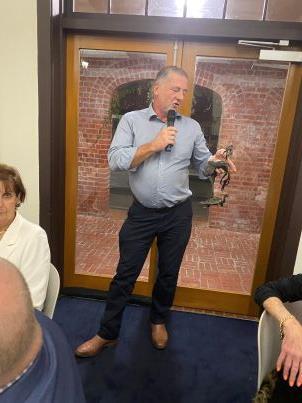
3 minute Speaker: Rob Cracknell Car Racing
Rob spoke about how he got into car racing and his present day car, a "Tiger" built in the UK and popular car for racing all around the world. He loved the sport in England as a boy but couldn't afford it. When e emigrated to OZ he and his brother built a car and started racing, including Mini Cooper"S" and Toranas. He bought his Tiger in America and has been racing it for 14 years. He races in the Sports 2000 class (cars with 2L engines). He will keep racing as long as he passes the medicals (Obviously many years away)
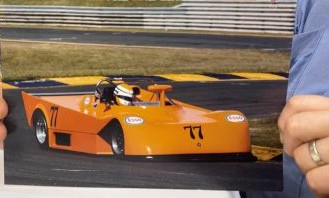 Crackers with a picture of his Tiger
April 21 Guest Speaker : Stuart Kenniworth on the life of a Research Scientist Stationed in Antarctica
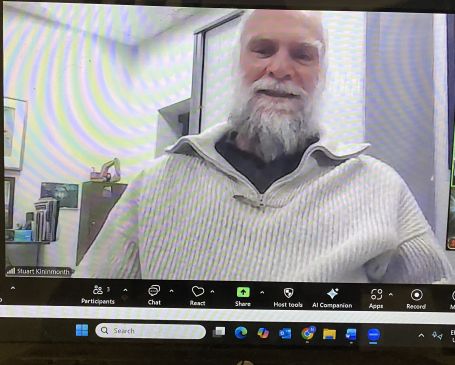 Stuart on zoom
Stuart is an Enviromental Research Scientist who has addressed us previouly from Heron Is on the Barrier Reff. He is now currently working in the Antarctic at one of the New Zealand Bases adjcent to McMurdo Sound, the USA base, a vastly different environment. He described thje amazing environment teaming with life in the ocean and especially the giant sea spidewrs, copepods and other bugs 100 time bigger than the temperate and tropical relatives. As we know the ice is melting and he is studying the effects of this melting on the sea habitats. A couple of interesting facts, at the moment the sea is -1.9C, Antarctica is twice the size of Australia, two km of ice sits on top of it, the sea ice is around 2-3m thick, April 24 is the start of the dark, no sunrise until September(lots of twilight) and the land mass holds 70% of the planets fresh water.
So Stuart is measuring how fast the ice is melting and travelling off the land mass and the effect this fres water is having on the ocean and the currents that travel from the Antarctic up to the rest of the planet. Stuart is also studying the life that lives attached to the underneath of the sea ice, the most prolific biosphere there. It is an algae forest supporting a diverse range of marine life. The temperature hovers around -40C so they have only limited periods of time (1hr) to work as it is too dangerous to stay out too long. There are no surface animals in winter on the land mass. About 14million years ago, Antarctica move south splitting away from Australia and has been icebound over the last 10 million years.
The base he lives in was built in 1957 and is manned all year round. It supports 120 people in summer but only 12 over winter. There are about 70 stations on Antarctica, four are Autralian. Other interesting facts about living there: No visitors in winter, only summer, Mt Erebus an 8million year old volcano is nearby, fridges need to warm the food in winter and there is no lightning because the air is too dry but a worldwide lightning detector is based there!
Stuart told us the big issue facing Antarctica is mining. As technology improves the ability to mine the region is tempting. All the minerals we have are in Australia, are in Antarctica. Some countries are completely against it, others are keen to give it a go. The main reason there are so many bases there, is that countries can claim to have an interet or say in the matter. It was a most stimulating and intersting presentation via zoom that triggered many questions. Thank you Stuart.
3 minute Speaker: Brendan Hoban Spitzbergen
We go to Copenhagen each your because we have a son and grandson there. But
we always try to do a side trip somewhere interesting.
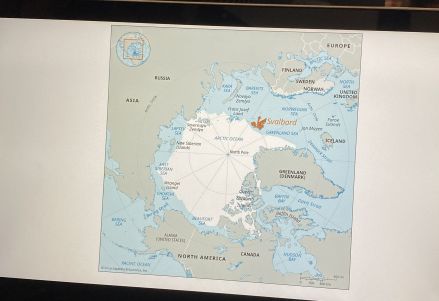
Last year, my wife chose Svalbard, a Norwegian Archipelago within the Arctic Circle,
to the island of Spitsbergen, township of Longyearbyen. It is a declared national park
at Latitude 78 degrees north.
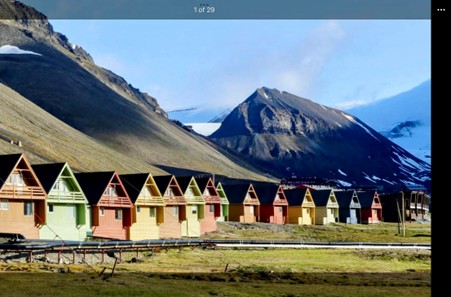
Longyearbyen really isn’t a town, it’s a coal mining village of 2300 people, none of
them old. You can’t have a baby at Longyearbyen, or die, in both instances you are
shipped off to the mainland. They can’t bury you in the hoarfrost.
It was summer, maximum temperature about 6 degrees. We flew in at midnight and
got to our hotel in bright sunshine, thank heavens for blackout curtains and
eyepatches. In the four days we were there, the sun did not set.
They are a bit worried about climate change, the average temperature has increased
by 9 degrees, and it has rained for the first time in recorded history. The International
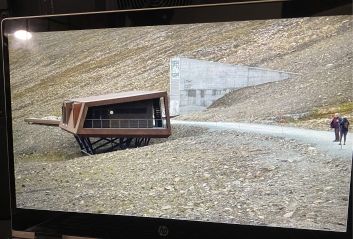
Seed Vault is in Svalbard and almost flooded.
They are also worried about polar bears. Everyone, from teenagers to adults is
taught how to react to a confrontation with a bear. Outside the village, it is mandatory
that one in every party carries a rifle and a flare pistol, the flare to frighten the bear
and the rifle to shoot anaesthetic darts. .
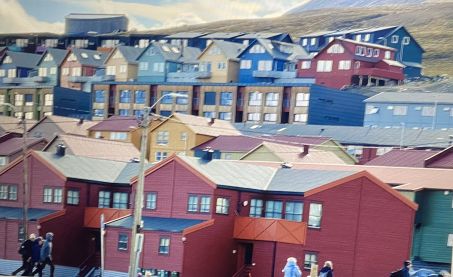
There is a pedestrian main street with about18 buildings and 30 shops, a
supermarket selling everything, a bakery, souvenir shops, a liquor store, several
cafes and restaurant, shops selling arctic clothing, travel agencies, a chemist, the
“sick house” and a gunshop. And, of course, a pub at our hotel.
Being Norway, only the government can sell alcohol. If you are a miner, you got a
monthly ration card for beer, when its gone, you go dry until the next month. Wine
and spirits are not rationed as only management drink that stuff. Visitors must
produce their passport but are not limited to quantity.
There is no vegetation anywhere, no trees, no shrubs, only stones and coal dust.
Power is generated by coal which also heats water for town central heating system
and all pipework, heating water, water supply and sewerage, is insulated and above
ground.
This town has 42km of roads, 5% of which are made. There are a few vehicles,
mostly 8-10 seater busses, mostly electric, well it is Norway. Every parking spot has
a charging power point and none of the vehicles are ever washed. There are about
2000 Skidoos, parked everywhere, the only way to travel in winter.
The village has two bana hagas (baby houses) two primary-secondary schools and a
university campus with about 500 mostly mature aged students doing masters
degrees and doctorates involving polar research and climate change.
We visited a glacier across the fiord, which is 25Km long, advancing on the sea at 80
metres per year but retreating at a kilometre per year due to global warming. It will
be gone in 20 years.
As mining has now ceased, the village survives on the university and now, tourism. A
cruise liner docked one morning with 3500 aboard who swamped the town. Visitors
(not day tourists) hike, mountain climb, kayak, dogsled or skidoo and camp, always
with a polar bear guard. Being a national park, you cannot fish or hunt.
It is a stark but stunning place and we loved it.
Brendan Hoban










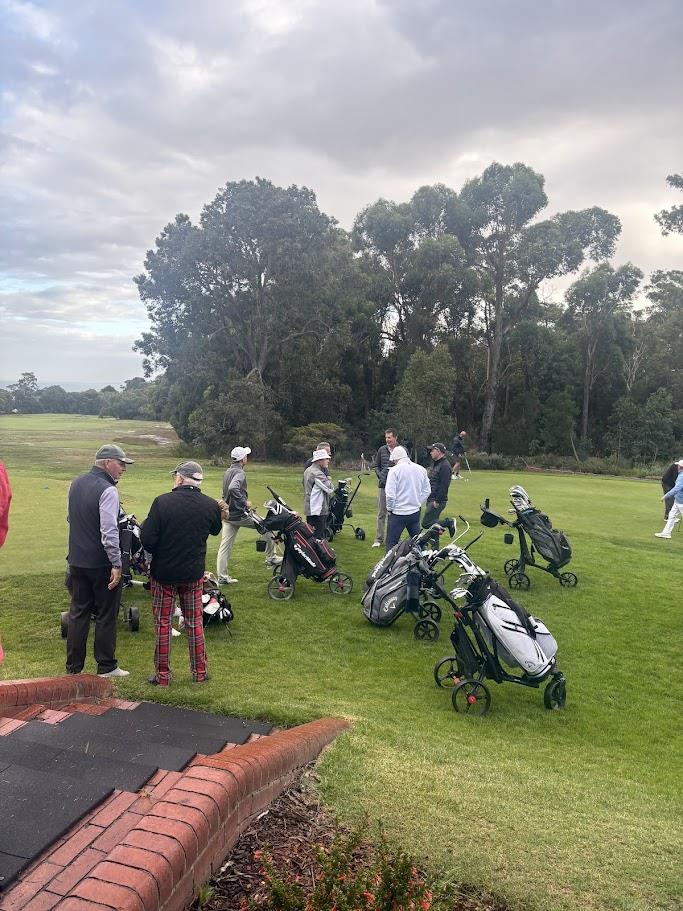 Some of the keen golfers getting ready to tee off on a stormy start.